Changing the Store and Making a Newsletter

I’m usually the type of person who likes to do things from scratch so I get them just right. Recently, though, I have realized that can be an exercise in futility. And when it comes to my artwork, getting things like HTML files and CSS files to my exact specifications takes me away from doing art. With that said, I knew I wanted to change my Big Cartel Store to match the new look of my site. The default store is fine, but many people have that look so it doesn’t really stand out. So, I put off doing it because I knew it would take some work. Today, though, I decided to see if a good, free Big Cartel theme existed…and it does. It is available over at Tonka Park. While I can certainly play with the CSS more, it looks good as it is. Plus, I still have the option to change it later. Done and done…and now, I can move on.

Speaking of which, I will be sending out my first e-newsletter to some clients next week. Once again, I was able to find a template on this really great marketing site called Campaign Monitor that will do the trick. Campaign Monitor helps you create newsletters, make client lists and track the usefulness of your newsletter. For now, that’s all I need. I know it is cliche to say, but what did we do before the Internet?

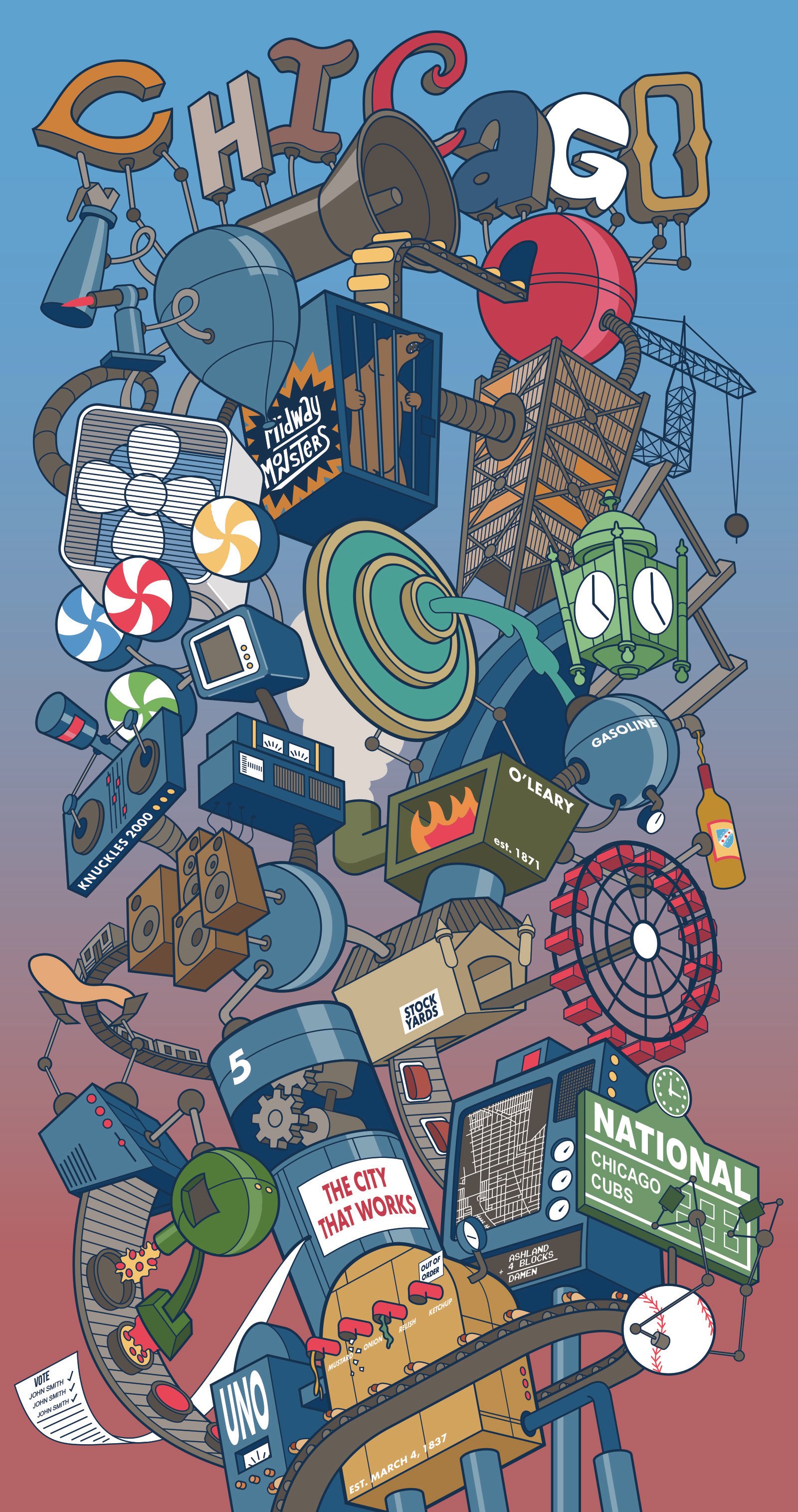
The Sweets Factory – Finished!

The Sweets Factory

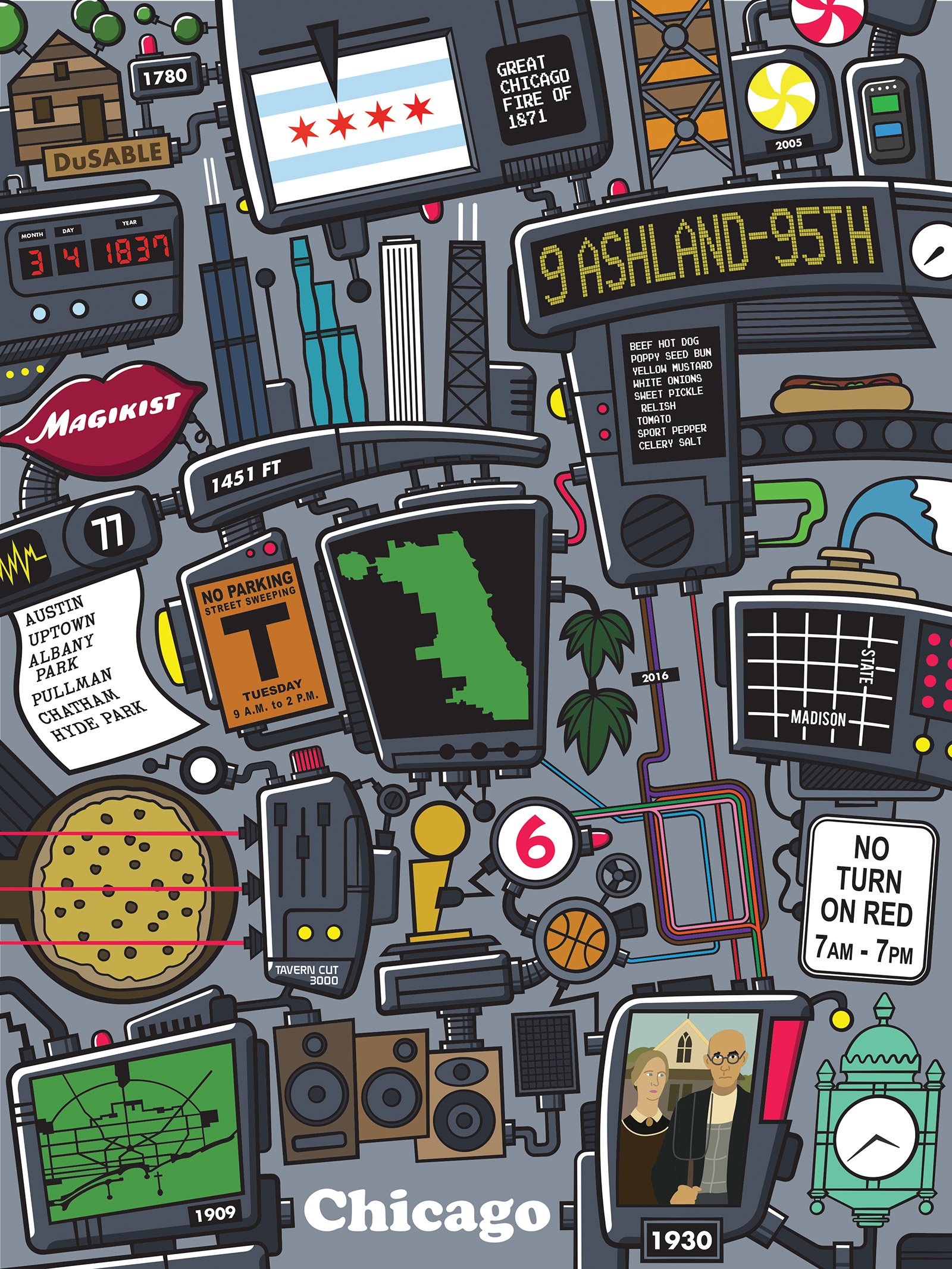
That was quick! I always find it odd to be talking about speed when completing an artwork. Whether it takes you 3 days, 3 weeks, 3 months or 3 years shouldn’t matter as long as the work looks good, right? I’ve probably been fixated on it lately because I’m trying to brush up on my Illustrator skills and being able to complete what seems like a rather complex illustration in just a few weeks is an accomplishment for me. Plus, the more work I do…the better my drawing gets…the better my aesthetic gets…the more ideas I complete…it’s a domino effect.

Let’s get to the work…it is a pretty straightforward idea…I wanted to create a crazy factory of sweets. I had drawn a sweets factory a few months ago and I couldn’t get the idea out of my head. Originally, the perspective of the drawing had you looking down on the factory. For this “updated” version, I wanted it to be similar to my other factories but less structured. So, I worked with a perspective that has you staring up from the horizon  line. Then, I really stretched and bent the machines of the factory so it broke free from a straight 2-point perspective.

As for the overall treatment, I stuck with a set number of colors again. I continue to like that direction. Also, I did away with the gradients and shading I had done in some of my previous work. I wanted to give it a more graphic look so I only added a few areas of shading on the underside of objects and a handful of highlights. One other departure was the use of a non-black color for the outline. Plus, I really played with the width of the strokes to make everything pop since I could not rely on the gradients to give the work dimension. I plan on expanding on that style in some of my future work…it gives everything a nice graphic element. To see the portfolio page and a larger version, click here.

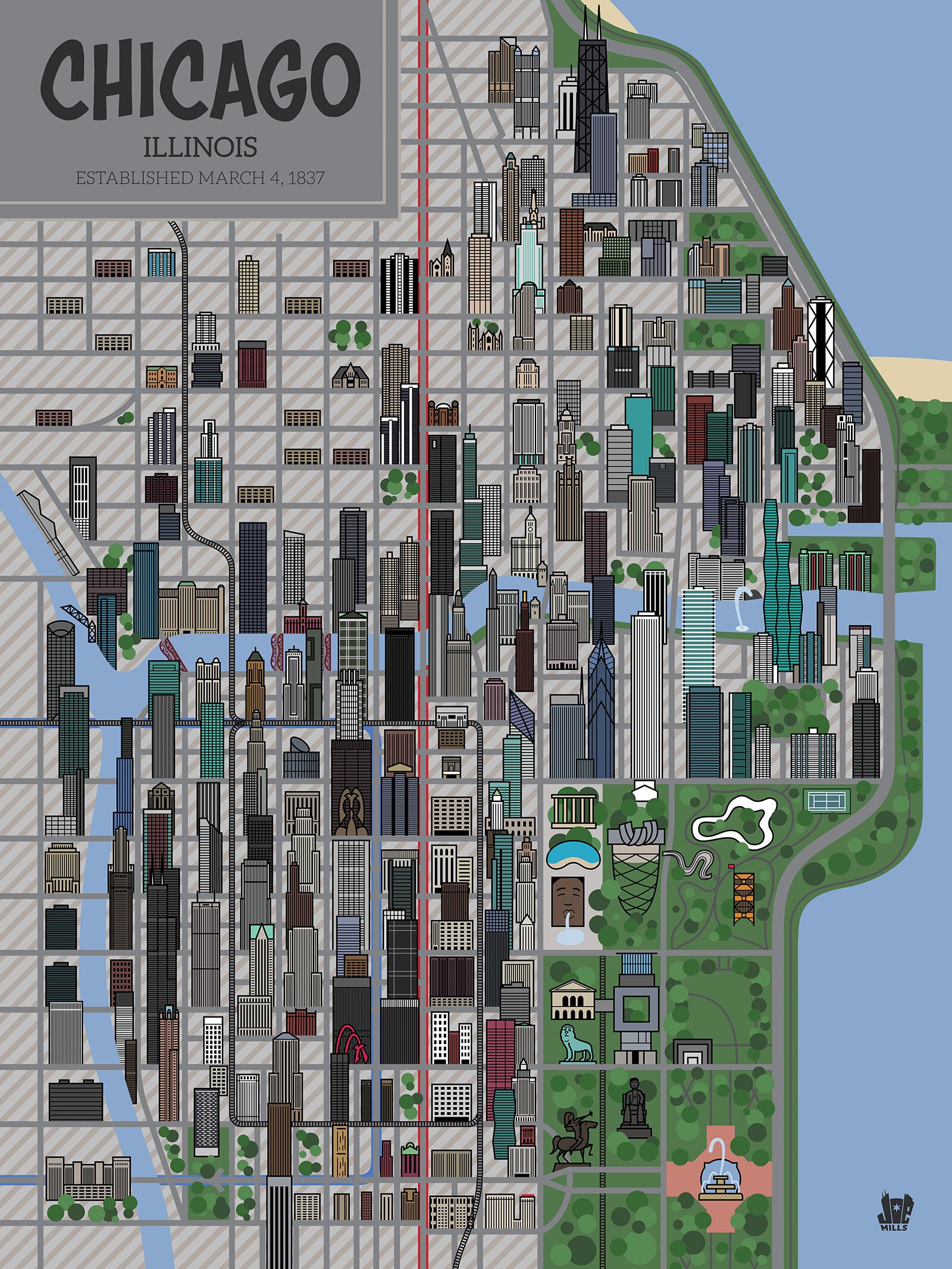
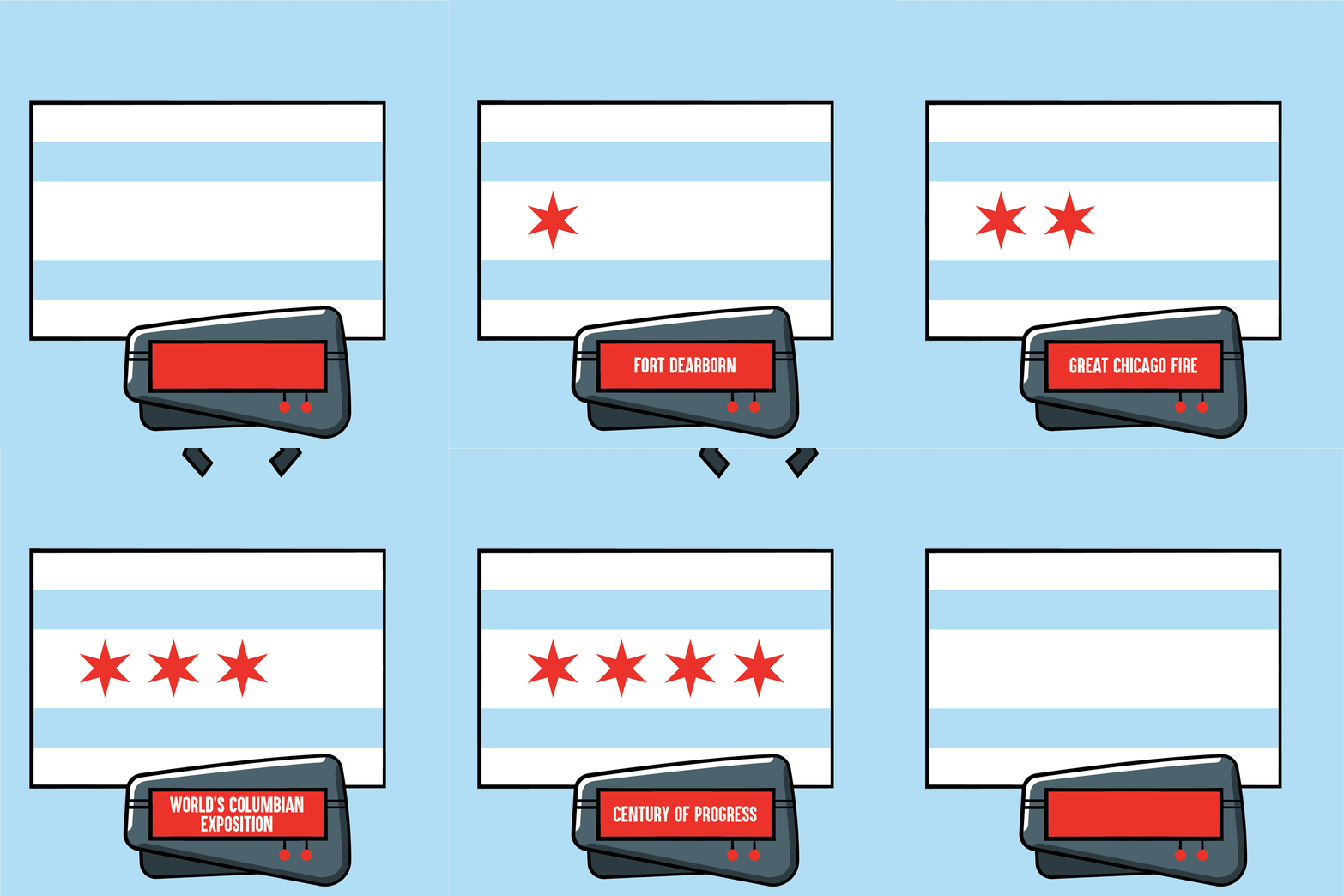
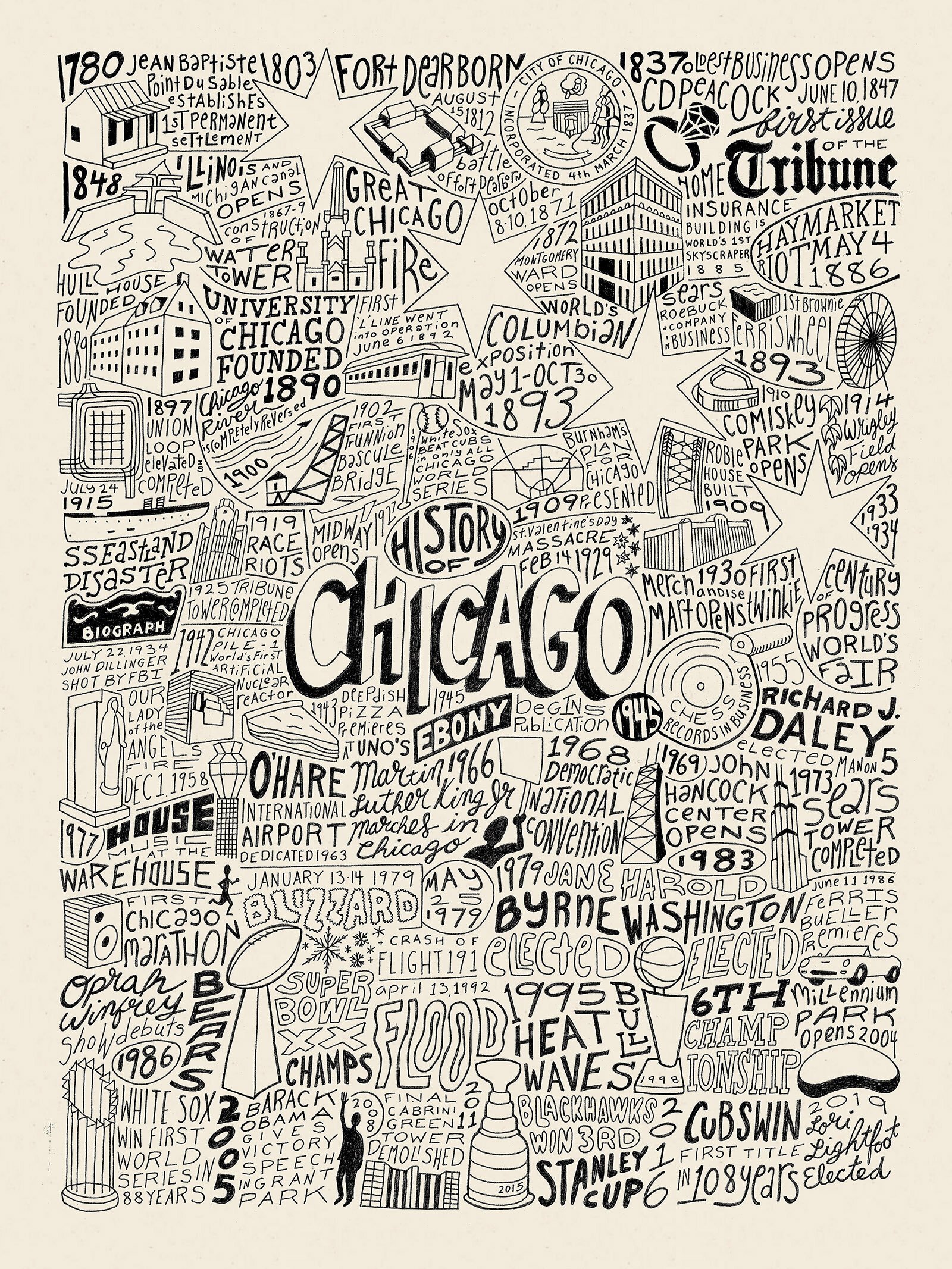
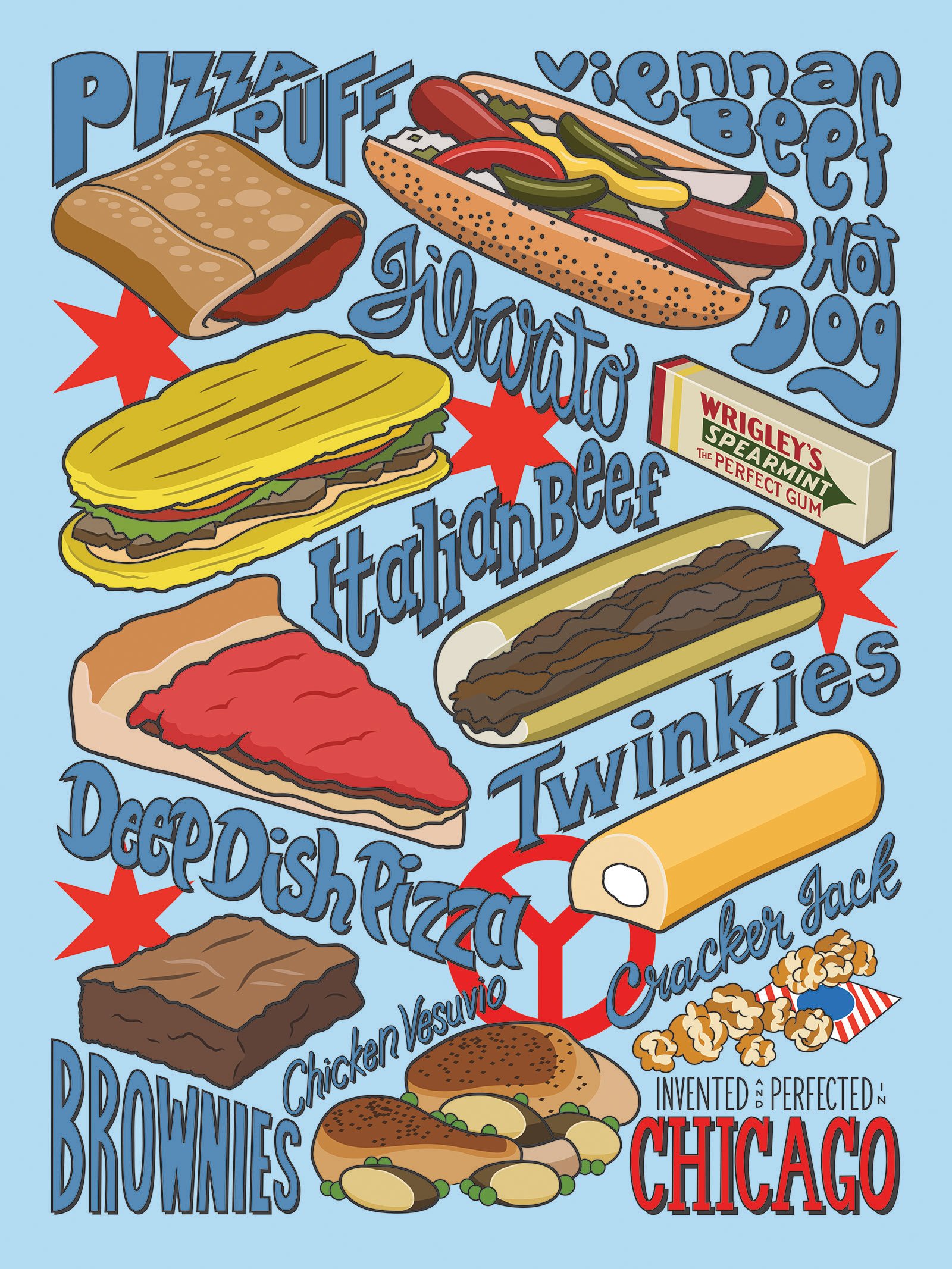
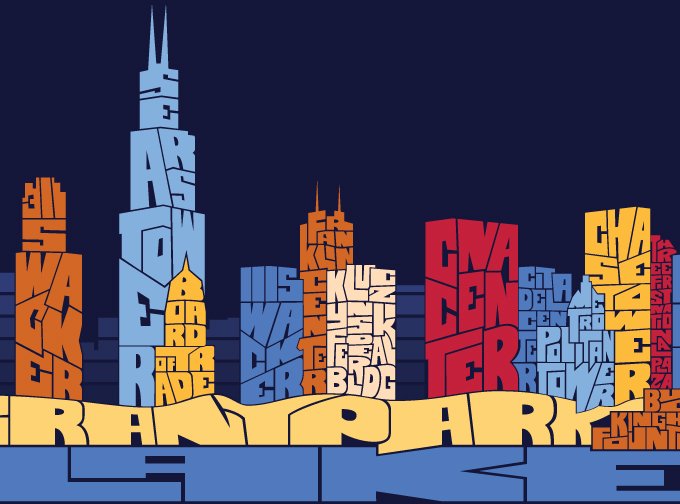
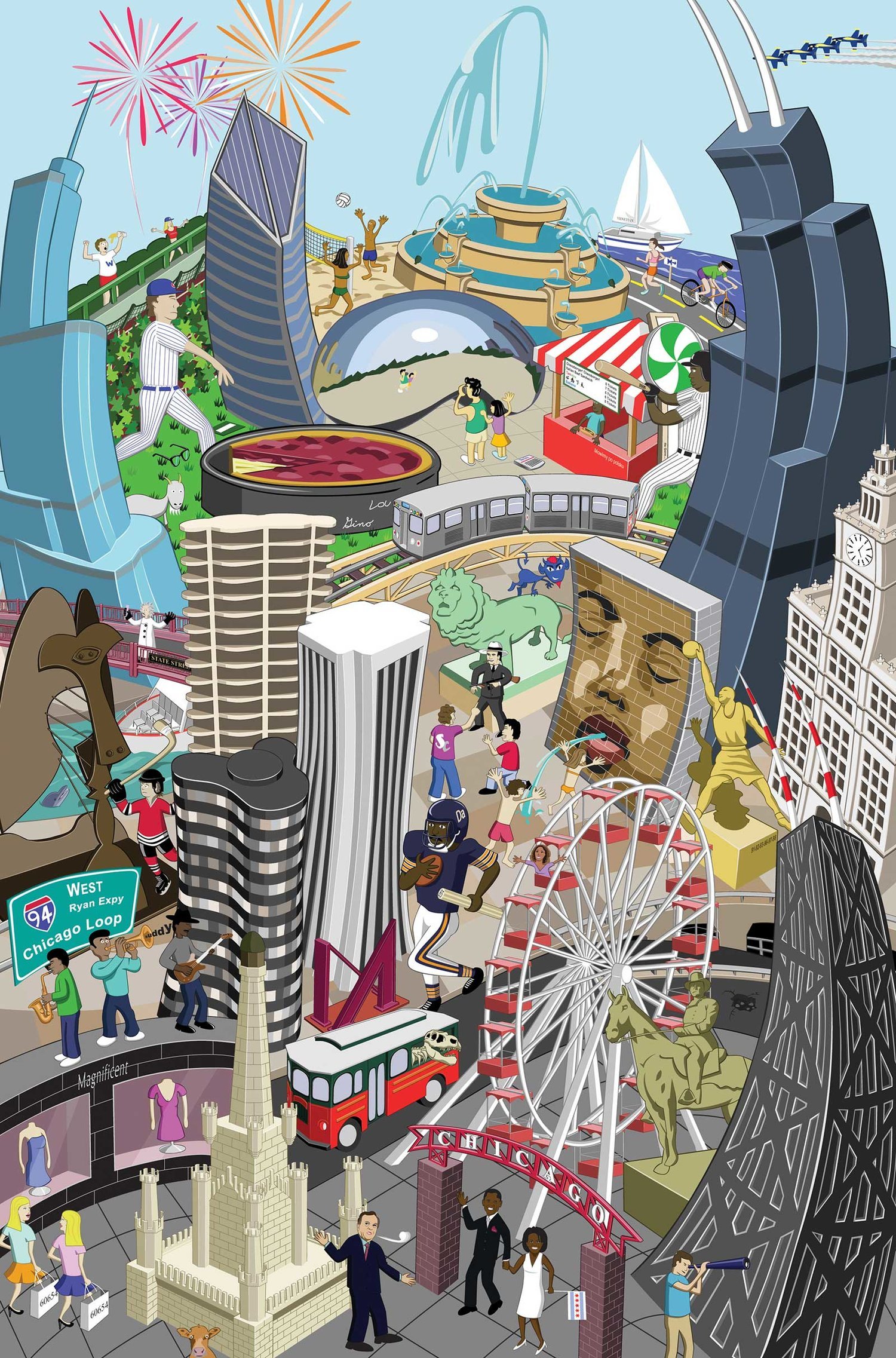
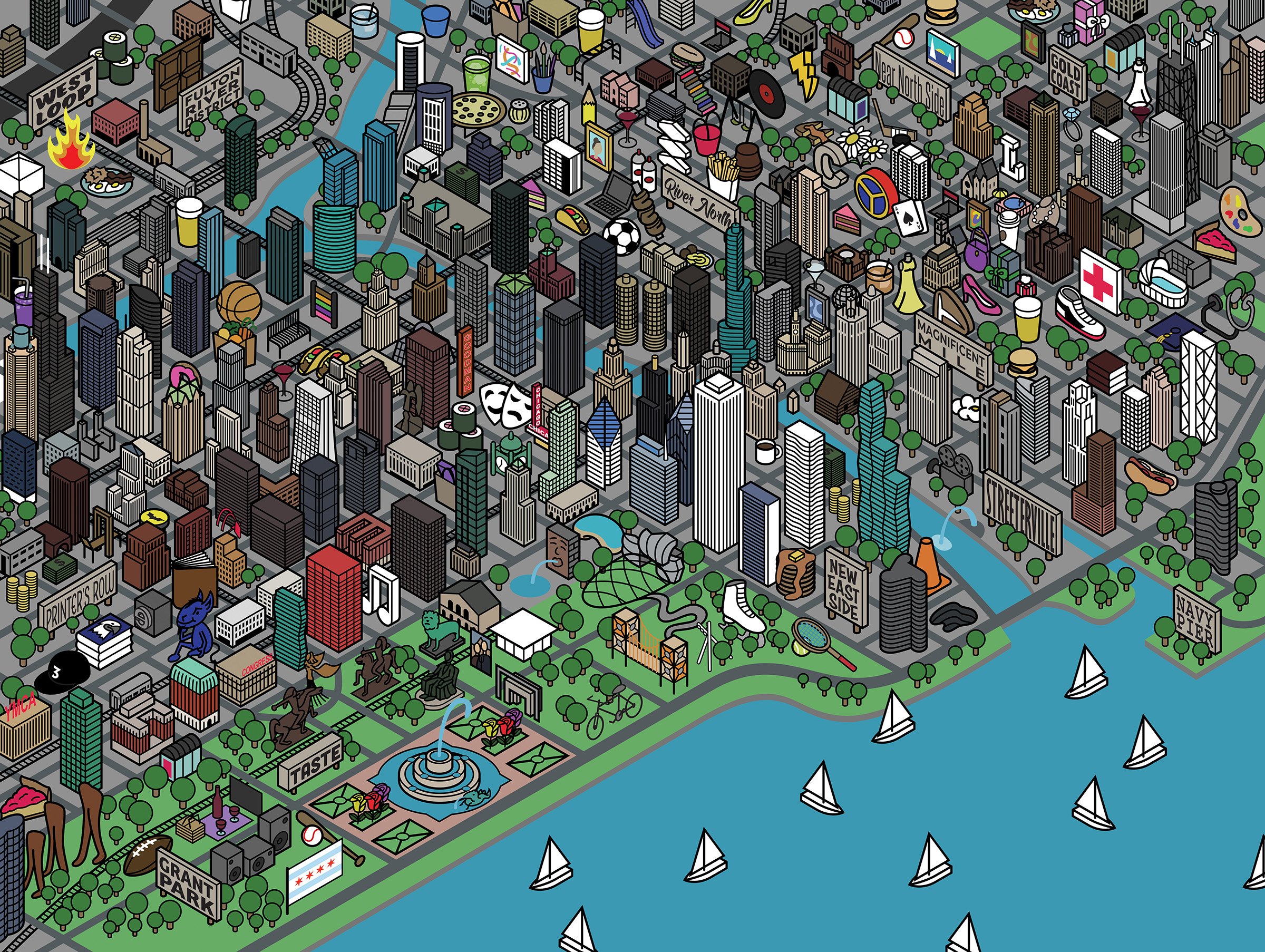
What’s next? I have an idea for a series of 5 simple Chicago illustrations…that’s right…going back to the Chicago work. Can’t get it out of my head. Although, I’d like to do another factory in order to build on the work above.

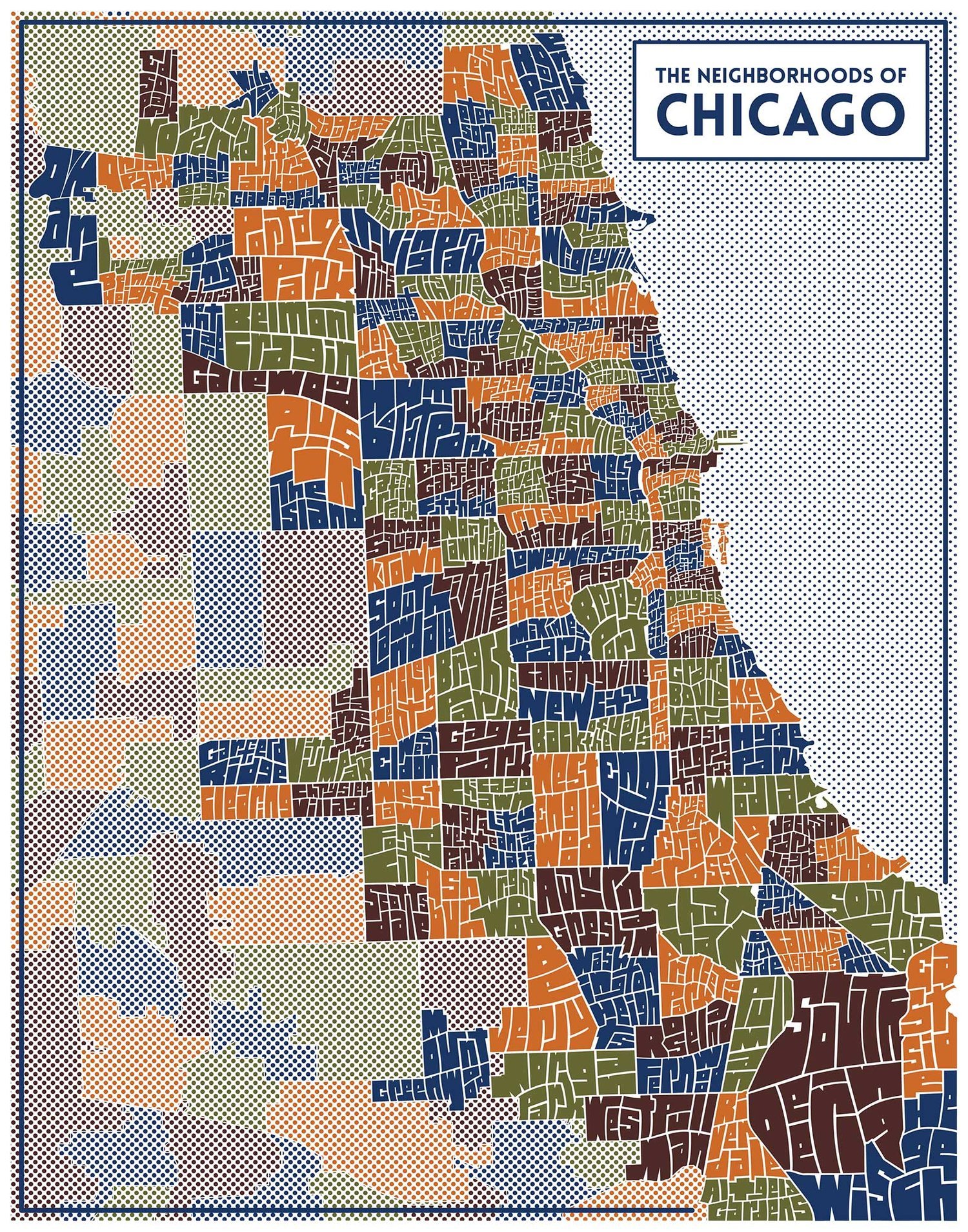
Chicago Communities Map – Done!

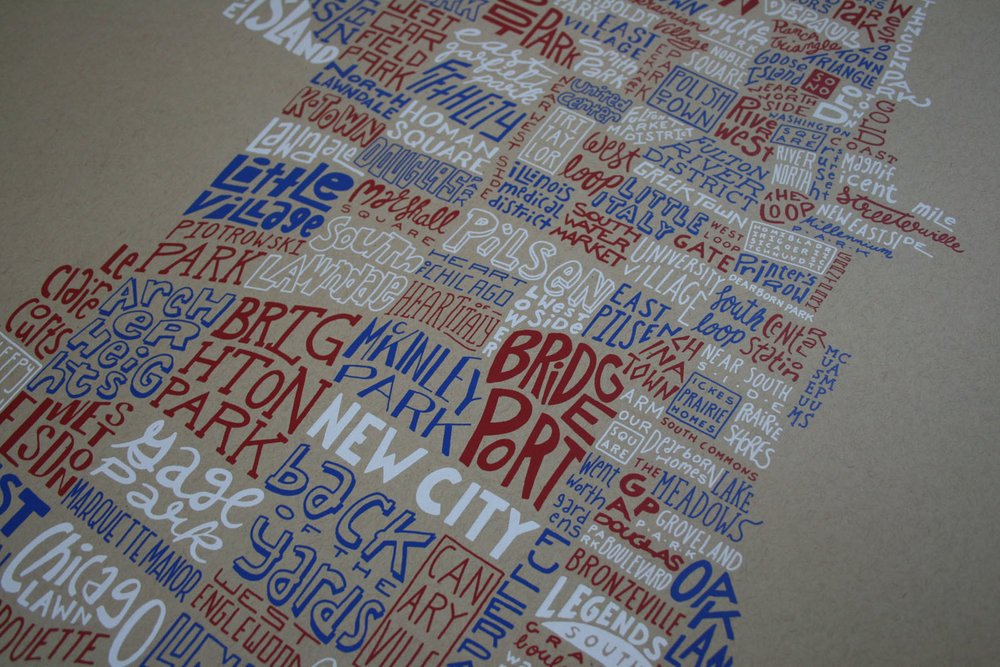
One of the skills I want to work on this year is creating simpler work. While I like the more complex and intricate illustrations, I’d like to do some artwork that are just as successful as my more detailed work. Since I work well within parameters, I gave myself some rules to follow with this illustration of the 77 community areas in Chicago. The main rule…it had to be only one color so it could easily be screen printed. Plus, if it could be screen printed, I would be able to use different colors and different paper as a way to make them more interesting as a print.

In the end, I decided to go with this handwritten style. I thought about using a specific font and manipulating it, but I thought I could achieve a more hand drawn feel by just doing the writing myself. After scanning everything, I just needed to trace the writing and figure out a way to make it pop off the page. I went as far as including some of the more recognizable neighborhoods housed within the community areas like Wicker Park and Pilsen, but it was beginning to look messy. In the end, sticking with just the 77 community areas made everything look much cleaner.

What’s next? I am going to do a dessert/sweets factory with a perspective looking up. Plus, I want to do a few more simple Chicago illustrations.

To see the portfolio page and a larger image, click here.